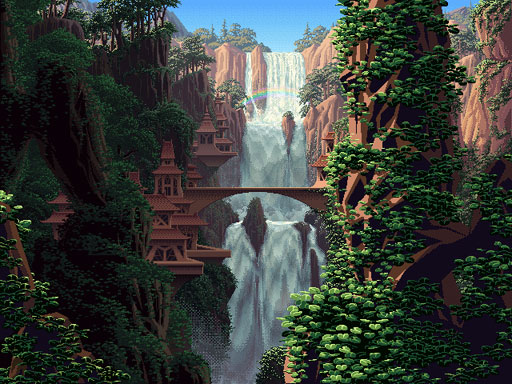
Before they fled, tshirts were thrown aloft to the wind of chance.
Tuesday, May 1, 2012
Ambiotic Synesthelligence
My
final project started with the goal of creating an interactive display that was
designed to be shown at live music events such as electronic music shows. I
struggled with many different ways to go with this project, but in the end I
decided to go with colors and abstract silhouette and auras that changes. Using
the Kinect motion sensor to sense its environment, the surface stays blank if
no one is there to look at it. Laying there sleeping till someone comes to by
to give it purpose and bring it to life simply for the entertainment of the
user. This ambient intelligence was is also sound reactive, changing color and
morphing the music and any sounds the viewer makes. While very benign on a plain
screen I tried to come up with something different. After playing around with
various materials, I found the one I wanted to use. Numerous panels of plastic
canvas used for yarn and cross-stitching proved to be quit interesting if you
layer them correctly. The layering made interesting fractal and various other
patterns in the mesh that is not quick to catch the eye. However, once you
notice them they are by far one of the most interesting aspects of the piece.
So with this in mind I got 40 panels and started sowing them together with
fishing line. I made 2 large sheets of 5 by 4 panels and hung them right
against each other so the patterns were visible. Projecting from behind allowed
the patterns to become more visible, and prevented anyone form blocking the
projector.
A&A Portal Map
For Mac users:
1. Download the map here
2. Locate the following directory:
/Users/your_admin_name/Library/ApplicationSupport/Steam/SteamApps/Steam_user_name/portal/portal/maps
Once you’ve located your Portal maps folder, drag the map (the .bsp file) in there.
3. In Portal
Now, fire up Portal on your Mac, and follow these steps. Screenshots are available below (click to enlarge them).
a) at the main screen, hit Options;
b) select Keyboard -> Advanced;
c) tick “Enable developer console”;
d) hit OK and Apply;
e) type in “map”, hit space, and then type the name of one of your newly-downloaded map (suggestions will appear, so you won’t have to memorize the whole name of the map). I used a map called "portal_gaming9", so I typed "map portal_gaming9";
f) hit Return (Enter), and your all set to play!
For Windows users:
1. Download the map with the link above
2. place it in your C:\Program Files\Valve\Steam\SteamApps\{steam name}\portal\portal\maps\
3. Follow same as above.
Paper: Making a map has been a hard process. But I think I've explored some reasons why I wanted to do it in the first place.
1. Download the map here
2. Locate the following directory:
/Users/your_admin_name/Library/ApplicationSupport/Steam/SteamApps/Steam_user_name/portal/portal/maps
Once you’ve located your Portal maps folder, drag the map (the .bsp file) in there.
3. In Portal
Now, fire up Portal on your Mac, and follow these steps. Screenshots are available below (click to enlarge them).
a) at the main screen, hit Options;
b) select Keyboard -> Advanced;
c) tick “Enable developer console”;
d) hit OK and Apply;
e) type in “map”, hit space, and then type the name of one of your newly-downloaded map (suggestions will appear, so you won’t have to memorize the whole name of the map). I used a map called "portal_gaming9", so I typed "map portal_gaming9";
f) hit Return (Enter), and your all set to play!
For Windows users:
1. Download the map with the link above
2. place it in your C:\Program Files\Valve\Steam\SteamApps\{steam name}\portal\portal\maps\
3. Follow same as above.
Paper: Making a map has been a hard process. But I think I've explored some reasons why I wanted to do it in the first place.
Mythological RPG
My final project started out as an extension of my first project in our class. For my first project I made a flip book of peoples faces so you could match different eyes with noses with mouths. With this project I was emphasizing the role of being able to choose your character or avatar. For project 4 I assigned the actors their characters, the element of personal choice was taken away. I used three of the same faces I had photographed for my project 1 but I went back to those people and asked for them to give me different facial expressions to convey different emotions.
The Lyudmila Project
Video games are finally moving out
of the basement. No longer limited to
niche groups and spaces, video games are now a part of everyday life. With over a half a billion people playing
worldwide, and 183 million people playing in the United States, video games, at
least from a numbers standpoint, have achieved the status of being a mainstream
activity and medium. And with this
large-scale success, come new challenges.
As video games seek to establish
itself as being more than just a technological diversion and escape, but also
as an art form capable of new forms of expression, in addition to being an industry
with the same cache as other media, new criticisms and questions have arisen. Chief among these is why video games continue
to be perceived as being the territory and pursuit of young men under the age
of 30, while all signs and research point to the contrary. So why is it that video games, even with their
mainstream success, are still stuck with this stigma? One of the answers to this is simply misogyny.
One More Game...
Wouldn’t life be so
much better if it were like a video game?
Think about it! Everything
would be arguably better. Running
low on cash? Just cut some grass
to find enough money, or simply rob a bad guy’s hideout. Can’t seem to fall asleep? Just enter in the combo move for a good
night’s rest! While these ideas
may come off as nothing more than fantasy and day dreams, in truth, life, in
many ways, is a game. There are
rules, goals, interactions, rewards, and feedback in this life just as there
are in video games. This idea of
life being a game relates back to Wark’s theory of “Gamespace,” and brings up
the question if there is an instance in which we are not a part of some type of
game. Is there ever an instance or
situation in which we are not playing a game? That is not the question I want to ask, nor a topic I wish
to debate. Instead, the question
on my mind is that if life is a game, then what type of game is it?
There
are various and sundry forms of play, as well as a plethora of different gaming
genres. There’s agon, mimicry, shooters, fighters, puzzle games and many other types of
games and play that we participate in.
So what type of game is life?
I would like to argue that life is in fact a conglomeration of all the
various types of play and video game genres. Think of it as an advanced version of Grand Theft Auto. Just
as Grand Theft Auto combines multiple
gaming genres, so does life, except on a far grander scale. Life, in many ways, is a meta-game,
containing thousands of smaller, different mini games within it. These different games can be found
through out various aspects in life, and just as with different video game
genres, some people are better at certain aspects of life than others. Think about this for a moment: I am arguing that little instances of
life are games, or mini games.
Everything from conversations, walking down a path, working, eating,
falling asleep, and opening a door:
these are all different types of games in the game of life. This holds up true if we take into
consideration that some people are better at certain games than others, and
rarely is anyone good at all the games.
This
argument begins to make a little more sense if we were to stop and think about
it. If every little instance in
life is a game, then it makes sense if we are better at some instances or games
than others. For example, I may be
better at conversations and talking to people more so than others. However, I would not go so far as to
call myself a master at talking to others, nor the best. The manner in which I became adept at
speaking to others however is also indicative of video games: I learned and gained experience from
multiple situations and instances.
Just as one grinds a character to raise their level in a RPG, or learns
a new move, or practices a volley of combos in a fighting game to become better
at the game, one needs practice and experience to become better at life and its
games. So in order to beat, or
become better at the games of life, we need to practice and gain experience, or
be born with the innate ability that automatically makes us great at
games. The games in life that we
are usually good at, are in some ways fun! I would like to argue that these are the games, or instances
in life, that we want to play and enjoy.
These are the games we are good at, and rarely struggle with. We may still fail at times with these
games, but for the most part, we beat them.
While
there are some instances of life that we may be better at, just as how we are
better at certain games, rarely is one great at every game and all genres. Someone may be great at fighting games
and shooters, but they might be terrible at puzzle, and sports games. The same goes for life and its
cornucopia of games. For example,
I may be decent at the game of talking to others and conversations, however I’m
terrible at the game of eating healthy, or even though I’m great at talking to
others, I’m fail miserably when it comes to talking to a girl I happen to have
a huge crush on. While I could become
better at these games with more practice, experience, and better skills, there
are some games of life I’d rather not play. Games such as visiting my sister, mowing, or raking
leaves: these are some of the
games I hate, and feel miserable playing. I don’t have any fun playing these games, and avoid them at
all costs. However, in avoiding
these un-fun games, I am in a way playing a game: a game of avoiding.
Although I may hate certain games of life, or be bad at some games,
that’s not to say that these games, or instances of life are bad, and hated by
all. Some people are great at
eating healthy, or talking and hanging out with their sister; the same as how
some people are terrible at sports games and hate them, while others love
sports games.
In
conclusion, life is a conglomeration of multiple, various, and sundry
games. Much like Grand Theft Auto, it’s a larger game
filled with multiple mini games. Just
as there are several different types of video game genres, there are several
different types of games that make up the larger game of life. Arguably, every aspect in life is a
game: conversations, eating,
walking, thinking, decision making, and work are all examples of games found in
life. While there are several
games in life, some people are better at certain games than others, while
others are better at different games than others. For example, someone may be great at conversations and
terrible at decision-making while someone else may be great at decision-making
and terrible at conversations.
This may come off as common knowledge, but it’s interesting to think of
in a gaming context. So, while we
may never be able to truly escape gamesapce, we should ask ourselves this
question: “Do we really want to
live in a space were games, or game mechanics don’t exist?”
Monday, April 30, 2012
CLICK
I’ve always been a bit obsessive compulsive when it
comes to games. One lazy summer ages ago, I played Pac Man for 48 hours
straight. With over 5 million points and no end in sight, I was “in the zone.” Even
after two days of staring at a computer screen and inhaling food without
looking at it, quitting never entered my mind. I was ready to see how far the
game would let me go. My mother stepped in and ended the streak by pulling the
cord out of the back of my Atari 2600. I was mortified, hurt and more than a
little pissed off at her. Out of fear for my health, she pulled the plug on my
dreams of video game greatness. All the work I put in the game suddenly
amounted to nothing.
The collection of art here is a study in the worth
of video game rewards. McGonigal quotes a study that found that “5 million
gamers in the U.S., in fact, are spending more than 40 hours a week playing
games -- the equivalent of a full time job!” Wow. That’s staggering. Why? “According
to studies by Daphne Bavelier, a professor of brain and cognitive sciences at
the University of Rochester, video gamers show real-world improvements on tests
of attention, accuracy, vision and multitasking after playing certain titles.”
That’s a benefit of playing, but not the reason why we play.
A
study reported on in Science Daily might shed some light on this subject. “A
game can be more fun when you get the chance to act and be like your ideal
self,” says Dr. Andy Przybylski, a research fellow at the University of Essex
who led the study. “The attraction to playing video games and what makes them
fun is that it gives people the chance to think about a role they would ideally
like to take and then get a chance to play that role.” According to the article,
video games, in a way, are a visceral connection to our childhood, when we
often used our imaginations to project ourselves in different roles.
This
is awesome. Sign me up. I love to day dream. I love to aspire to greatness,
even to heights this sad reality will never allow me to reach. I’m hardwired to
love this style of play. Most of us are. Oh, but this sad, gritty reality
seldom exceeds our expectations. My art project focuses on the chasing of those
dreams in a world that is set to force failure on us.
How
many of you have spent hours in front of a computer, playing a game built
around a shell of a world, decent graphics, a closely metered leveling system
and what seem like paper cut-out quests? Massively Multiplayer Online
Roleplaying games are particularly notorious for this. To a large extent they
rely on us to fill in the blanks. Single-player roleplaying games like the Mass
Effect and Elder Scrolls series do much the same. They’ve given us the bricks,
lumber and paint. We add the mortar, nails and sweat, bringing their world to
life. We deftly use the brushes to add the finishing touches to their creations.
They give us the scenery; we breathe life into it.
But
what are we really doing for over 40 hours a week? The easy answer is sitting
in front of a monitor or TV and clicking. Ever get tired of playing a video
game? We know this at a basic level. The mind-blowing, genre-defining game that
was our favorite last week begins feeling like work next week. Especially fine
games can take months to become tiresome. Eventually, no matter how much we
love them, the luster fades. Yet, we don’t mind giving up those long hours
clicking away in front of a TV for great games. We don’t regret it. We had fun
after all is said and done.
MMORPG’s
have a unique problem: they have to keep you coming back week after week. How do
you keep people coming back long after the glow is gone? Positive feedback.
Metered rewards. As an idealized extension of ourselves, it is inherent in us
to want our avatars to flourish, gain prestige and even dominate the world around
them. By metering these rewards and accomplishments, games keep us engrossed
long after the pretty graphics and awesome gameplay’s ability to entertain us
has diminished to nothing. Press a button; get a level. Rinse repeat. Most
games have a level limit and end of game quests. Once these are complete, the
gamer has few options. Keep playing the character through the same old quests
for the sheer joy of playing that character, starting over with a different
character or giving up on the game. A few games, Like Dungeons and Dragons
Online have a built-in incentive program for reincarnating your existing maxed
out character back as a first level whatever. For this, you’ll get a minor bonus
to stats and new options. All the while, we’re clicking away.
Take
a step back and look at what you’re doing. Stripped down to their essence,
these games are little more than click, push a button get a level.
Sunday, April 29, 2012
8-bit color cycling in HTML5
Color cycling was a technique used in 8-bit video games to give off the appearance of animation without actually utilizing frames. Instead, the color palette was changed around (or "cycled").
This website serves as a demo of an 8-bit color cycling engine real-time rendered into an HTML5 Canvas (with added ambient environmental sound). There are 35 different scenes, which are by an artist who actually worked on many of these old games. I thought this was appropriate since it's finals time, and this is pretty and doubles as a white noise machine on your computer. So, relax, y'all.
http://www.effectgames.com/demos/canvascycle/
Saturday, April 28, 2012
serendipity or chaos: it happened.
I was playing around with keying in premiere and decided to take a random screen grab. Here is what it said. You will probably have to look at it at the original size to read the lower text from the movie file.
Friday, April 27, 2012
Thursday, April 26, 2012
If Video Games Were Real.....
Saw this yesterday night, reminded me of some projects people are currently working on. Enjoy.
http://www.youtube.com/watch?v=Z-xiNaTXZV8
https://www.dropbox.com/s/73o5g3tuyszd2r7/linbrown1.jpg
https://www.dropbox.com/s/8ysbhziz4a79b2x/linbrown2.jpg
https://www.dropbox.com/s/de1pe36j5b8348y/hodge.jpg
https://www.dropbox.com/s/gv7ledam8l9zwwc/hodge2.jpg
https://www.dropbox.com/s/j25kq49gqukwko7/lyudmila1.jpg
https://www.dropbox.com/s/255zkot5ums3jzy/lyudmila2.jpg
https://www.dropbox.com/s/8ysbhziz4a79b2x/linbrown2.jpg
https://www.dropbox.com/s/de1pe36j5b8348y/hodge.jpg
https://www.dropbox.com/s/gv7ledam8l9zwwc/hodge2.jpg
https://www.dropbox.com/s/j25kq49gqukwko7/lyudmila1.jpg
https://www.dropbox.com/s/255zkot5ums3jzy/lyudmila2.jpg
Wednesday, April 25, 2012
Subscribe to:
Posts (Atom)